




January 27, 2026
0 Comments

Written by
Team iTatami
Judo tatami dimensions: competition area and official rules
In judo, the correct dimensions of the tatami area they are not a secondary technical detail, but a central element to ensure safety, training quality and regulatory compliance. Projections, repeated falls and off-axis movements make careful planning of the space essential, especially when dealing with race area and safety edge.
Complying with official measures means training in a realistic context, reducing the risk of injury, and creating an environment consistent with the competitive environment. It is no coincidence that the guidelines defined by International Judo Federation They establish precise dimensions for the fighting area and the perimeter safety zone, precisely to absorb the impact of the most dynamic techniques.
In this guide we analyze in detail the judo tatami dimensions, clarifying the difference between competition area and total area, the recommended thicknesses and best practices for designing a safe and functional dojo, both for daily training and for competitions.
🎯 Find out more about our Tatamis with our Catalogue
iTatami Tatmi are designed down to the smallest detail to ensure safety for athletes in every martial arts discipline.
Find out more →
iTatami Tatmi are designed down to the smallest detail to ensure safety for athletes in every martial arts discipline.
Find out more →
Content index
Official rules for the Judo competition area
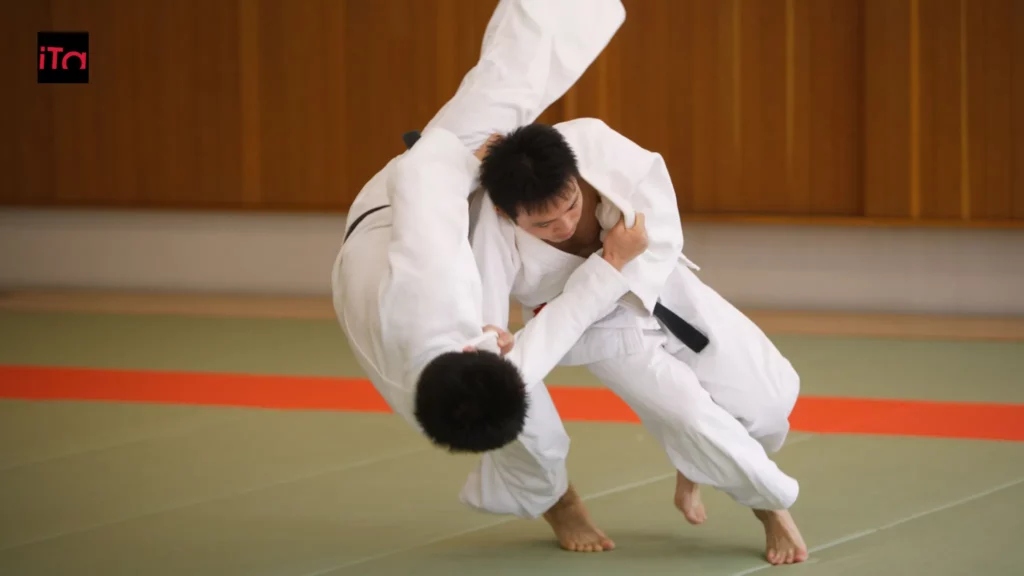
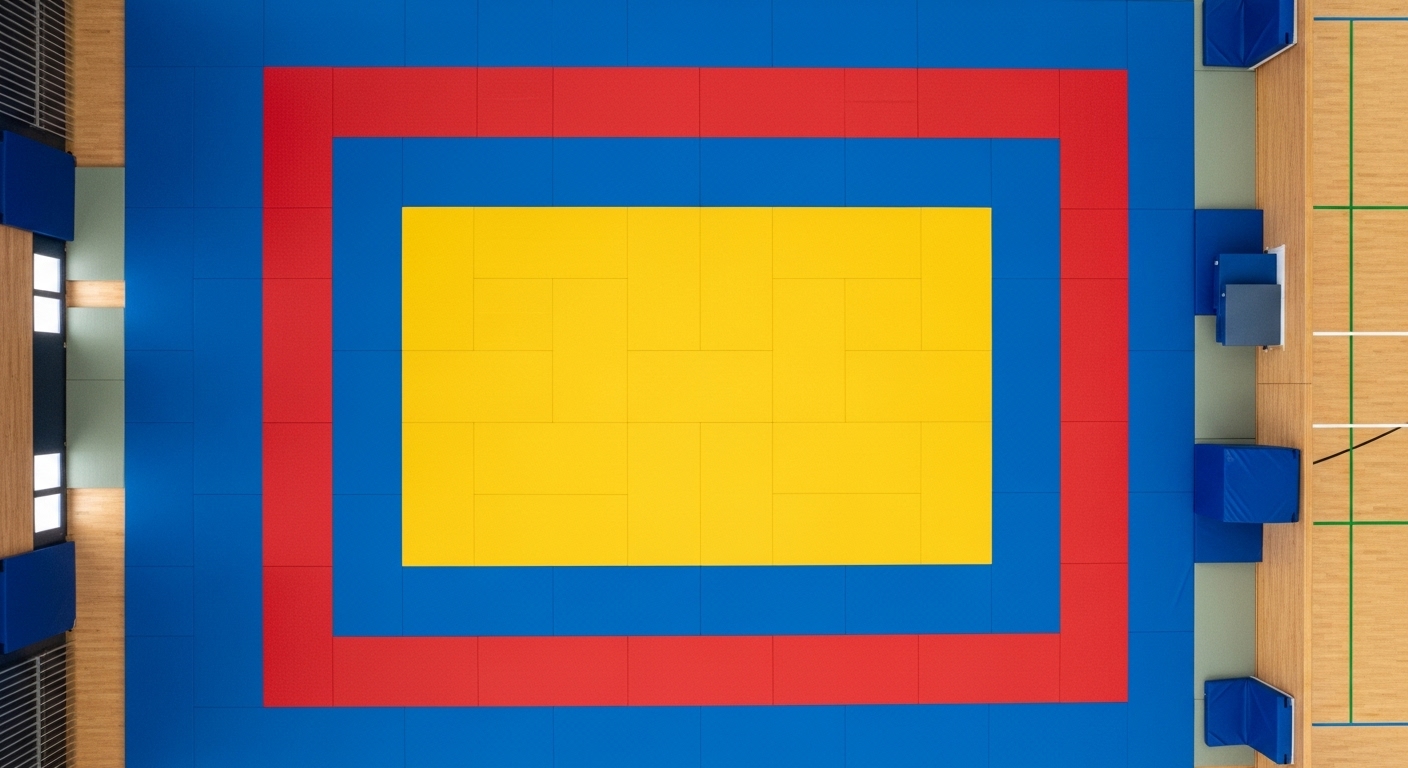
In judo, the design of the tatami area follows very precise criteria, designed to handle the high intensity of projections and falls. The standards clearly distinguish between combat area, safety edge And total area, three elements that perform different but complementary functions.
This distinction is the basis of the rules defined by the International Judo Federation and represents the reference standard for competitions and dojos.
Combat area
THE'combat area it is the central area where the meeting takes place.
It is the operational space of judo, where the following take place:
- taken
- projections
- ground work
Here the athlete must be able to express the technique without constraints, maintaining continuity and control of the action.
Safety edge
The tatami safety edge It is the perimeter band that surrounds the combat area.
In judo it is not an accessory element, but obligatory, because it has a fundamental protective function.
It is used to:
- absorb falls that end outside the central area
- avoid impacts with rigid surfaces or lateral structures
- ensure continuity of support during outbound projections
In judo, in fact, many techniques naturally take athletes beyond the center of the area: without an adequate edge, the risk of injury increases significantly.
Total area
THE'total area is the sum of:
- combat area
- perimeter safety edge
It represents the minimum overall space necessary to practice judo in safe conditions and in compliance with regulations. This is the parameter to consider when designing or assessing the square footage of a dojo.
Why is the safety edge mandatory in Judo?
Unlike other disciplines, judo is characterized by:
- high-energy projections
- frequent falls on the back and shoulders
- off-axis movements with respect to the central area
For this reason, the safety edge It is an integral part of the competition area: not only does it reduce the risk of injury, but it also improves the quality of training, allowing athletes to perform techniques without limitations or fear.
Even in non-competitive dojos, respecting this structure increases safety, professionalism and the durability of the tatami.
Official Judo tatami dimensions
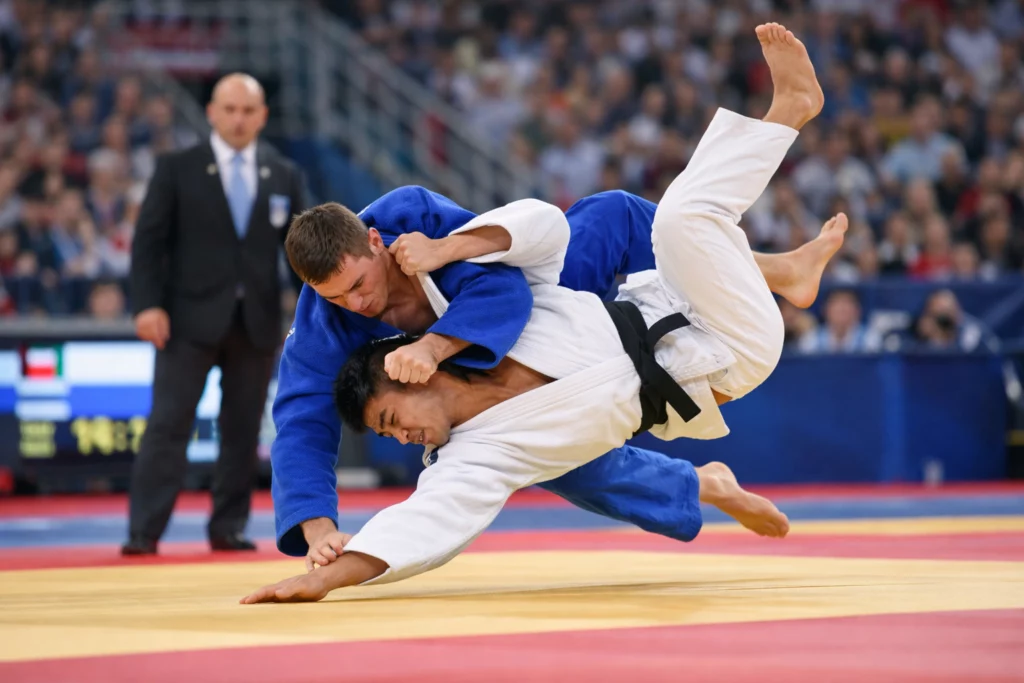
The official dimensions of the judo tatami They are defined to ensure safety during projections and continuity of action even in the event of exiting the central area. For this reason, in judo it is essential to distinguish between combat area, safety edge And total area.
The reference measures are those established by the International Judo Federation, used in official competitions and also adopted as a standard in the design of dojos.
Official measurements of the Judo competition area
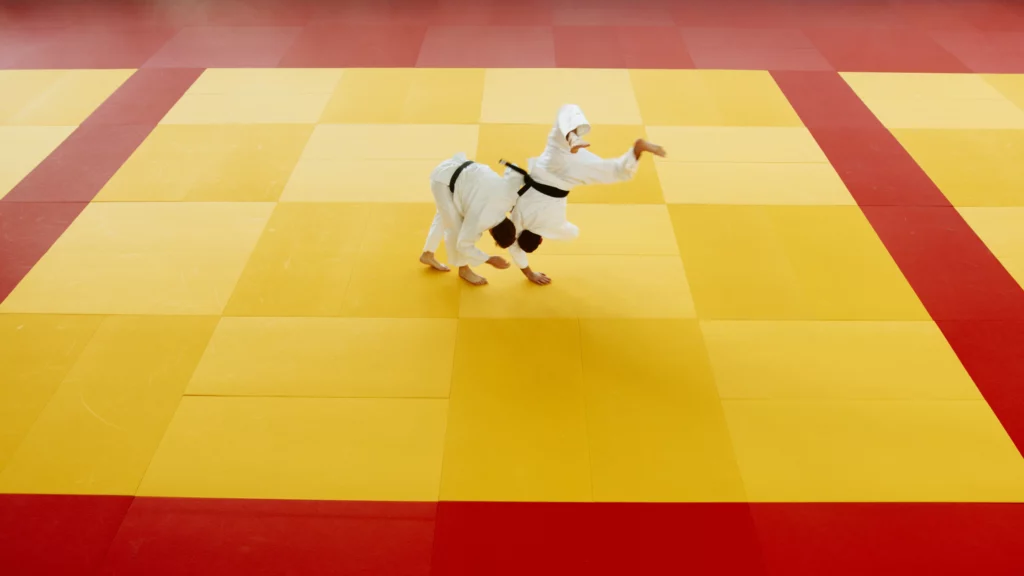
- Combat Area: 8 × 8 m
- Safety edge: 3 m per side
- Total area: 14 × 14 m
THE'combat area represents the central square where the match takes place, while the perimeter safety edge It has the task of absorbing falls and projections that end outside the active area. The sum of these two areas defines thetotal area, or the minimum space needed to practice judo in safe conditions and in compliance with regulations.
Why are these measures so important in Judo?
In judo, techniques include:
- high intensity projections
- repeated falls on the back and shoulders
- quick movements that easily take you out of the center of the area
The 3-meter safety edge It is therefore not an optional element, but an integral part of the tatami: it reduces the risk of injury and guarantees continuity of practice even in the event of an involuntary exit from the combat area.
Even in dojos dedicated only to training, respect the proportions of the official competition area improves safety, technical quality and preparation of athletes for the competitive context.
Recommended thicknesses and densities for Judo
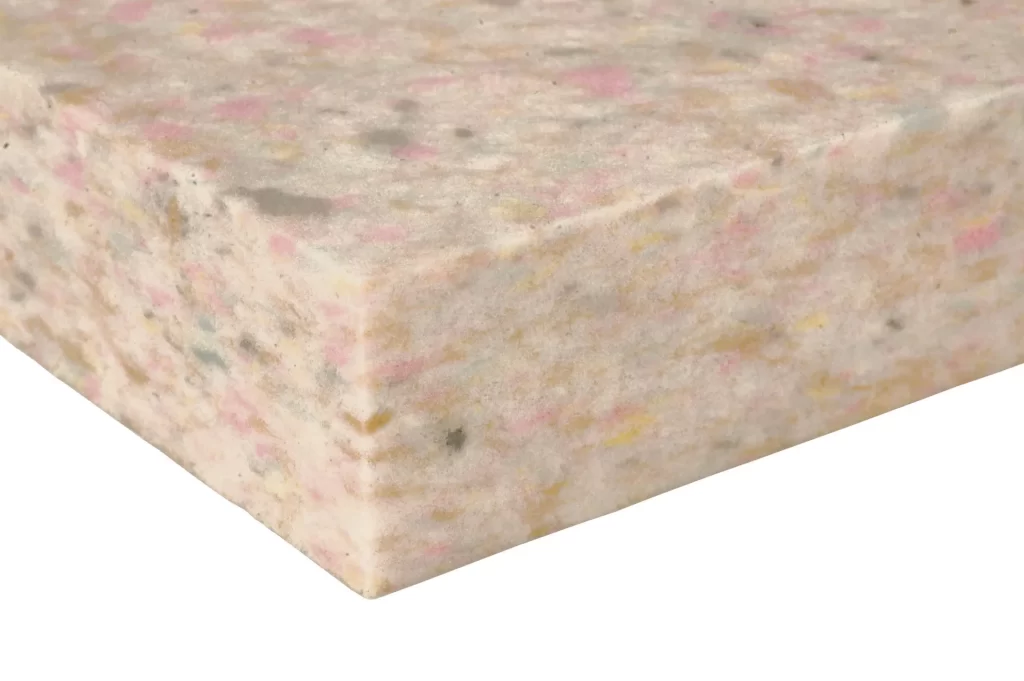
In judo, the thickness of the tatami it is not a secondary detail but a determining factor for the athlete safety and for the surface durabilityThe projections and falls typical of this discipline generate high loads, which must be absorbed in a controlled and uniform manner.
Why do we need 4–5 cm tatami mats in Judo?
For the practice of judo it is recommended to use tatami with thickness between 4 and 5 cm, combined with a medium-high density.
This combination allows you to:
- absorb the energy of projections
- reduce the load on your back, shoulders and joints
- maintain stability during grips and movements
- avoid permanent deformations over time
A thinner thickness does not guarantee adequate protection, especially in the case of intensive training or large groups.
Why do we need 4–5 cm tatami mats in Judo?
For the practice of judo it is recommended to use tatami with thickness between 4 and 5 cm, combined with a medium-high density.
This combination allows you to:
- absorb the energy of projections
- reduce the load on your back, shoulders and joints
- maintain stability during grips and movements
- avoid permanent deformations over time
A thinner thickness does not guarantee adequate protection, especially in the case of intensive training or large groups.
The impact of throws on the tatami
In judo, most techniques involve:
- vertical or semi-vertical falls
- direct impact on the back and shoulders
- continuous repetition of falls during training
The tatami must therefore dissipate the impact without:
- be too stiff (impact trauma)
- be too soft (loss of stability)
A thickness of 4–5 cm with adequate density allows the tatami to absorb shock and quickly return to its original shape, ensuring continuity of training and safety.
Common mistakes when choosing a judo mat
One of the most common mistakes is evaluating the tatami only based on thickness, without considering the density of the material.
Tatami mats are too soft
- excessive sinking
- instability during grips and movements
- increased fatigue for athletes
- accelerated wear
Tatami mats too rigid
- poor impact absorption
- increased risk of trauma
- reduced comfort in repeated falls
The correct choice is not “softer” or “harder”, but balance between thickness and density, depending on the discipline and intensity of use.
Judo Dojo Layout: Safety and Functionality
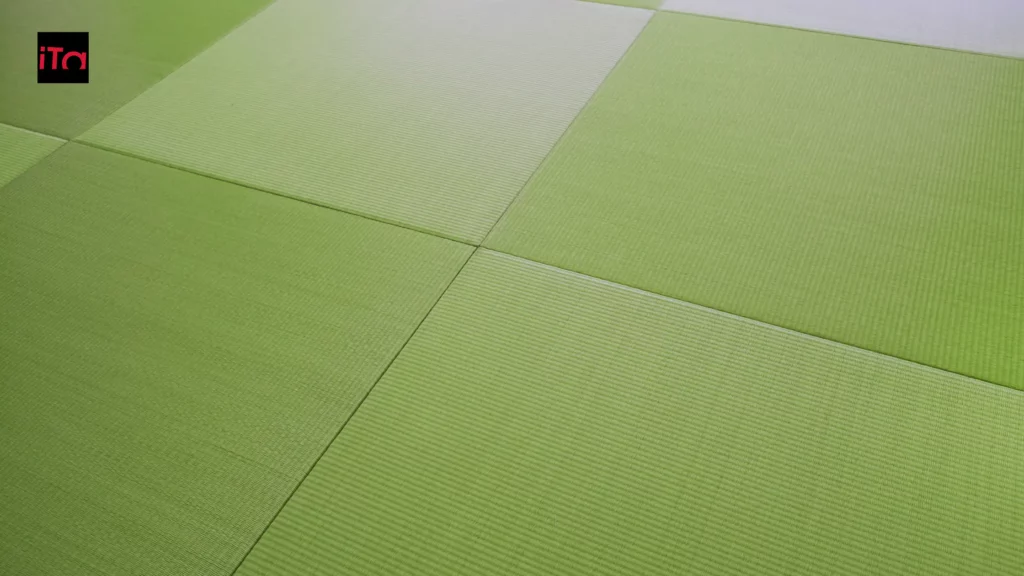
In judo, even with tatami mats correct in size and thickness, a poorly designed layout can compromise the safety, comfort and durability of the surface.
Entrances, tatami continuity, and management of edges and corners are structural elements that directly impact daily practice.
Location of the entrances
The entrances to the tatami area must be designed for do not interfere with the combat area nor with the safety edge.
Practical information:
- position the entrances outside the total area (race area + edge)
- prefer access from the long side, not from the corners
- avoid passages that cross the central tatami
A poorly positioned entrance causes:
- localized wear of the tatami
- distractions during training
- risk of tripping or collisions
The tatami area must remain a space “closed”, crossed only during practice.
Continuity of the tatami
There surface continuity It is a fundamental requirement in judo, where throws and movements often take athletes out of the center of the area.
The tatami must:
- have precise and stable joints
- respond uniformly across the entire surface
- there must be no difference in level between the combat area and the safety edge
Interruptions or differences in elastic response can cause:
- loss of balance
- unstable supports
- increased risk of injury during falls
Edge and corner management
Edges and corners are the most critical points of a judo dojo.
Best practices:
- always maintain a continuous safety edge
- avoid "exposed" corners near walls or pillars
- protect perimeter areas with dedicated solutions
- ensure that the tatami does not end directly against hard surfaces
An unprotected corner nullifies the function of the safety edge and represents one of the main risk factors in the event of exit projections.
Judo cover sheet
The cover sheet It is an element that is often underestimated, but in judo it plays a strategic role both in terms of safety both of tatami durationIt is not just an aesthetic cover, but a real one functional protection of the training or competition area.
What is the purpose of the cover sheet in Judo?
Applied over the tatami, the cover sheet allows you to:
- make the surface uniform of the race area
- protect the joints between the tatami
- improve the stability of support during catches and throws
- reduce wear and tear caused by intensive and repeated training
- increase safety in case of falls when exiting the central area
In judo, where the action is continuous and often develops beyond the center of the area, these aspects make a real difference.
When it is recommended (and when it becomes essential)
The Judo cover sheet is highly recommended in the presence of:
- dojo with high number of practitioners
- intensive or daily training
- frequent use of the safety edge
- internal events, internships or competitions
It becomes instead essential When:
- the dojo is inserted in a space multipurpose
- the tatami mats have become worn out
Continuity, grip and safety
A good cover is designed to offer:
- controlled adherence (neither too slippery nor too braking)
- uniform response across the entire area
- absence of creases or irregular tensions
This allows athletes to:
- move with confidence
- perform techniques without forced adaptations
- reduce the risk of slips or sudden stops
An advantage also in terms of maintenance
In addition to safety, the cover makes it easier to daily management of the dojo:
- makes cleaning easier
- protects the tatami from sweat and dirt
- extends the useful life of the underlying surface
In many cases, the use of the cloth allows you to reduce replacement costs of tatami in the long term.
Design your Judo tatami area correctly
Now that you have a complete overview of Judo tatami dimensions, competition area, safety edge and recommended thicknesses, the next step is to transform the rules into a real, safe and functional space.
Every dojo has different characteristics: size, structural constraints, number of practitioners, and intensity of use. For this reason, a standard solution is rarely the right one.
Quote for custom-made Judo tatami mats and competition area cover
Request a personalized quote For:
- tatami cut to size based on available space
- correct configuration of race area + safety edge
- Judo competition area cover for continuity, protection and durability
You will receive a technical proposal designed to:
- daily training
- internships and competitions
- new or renovated dojos
931

 English (UK)
  Italiano
  Français