




August 11, 2026
0 Comments

Written by
Team iTatami
How to assemble a tatami mat? A guide to installing it in the gym.
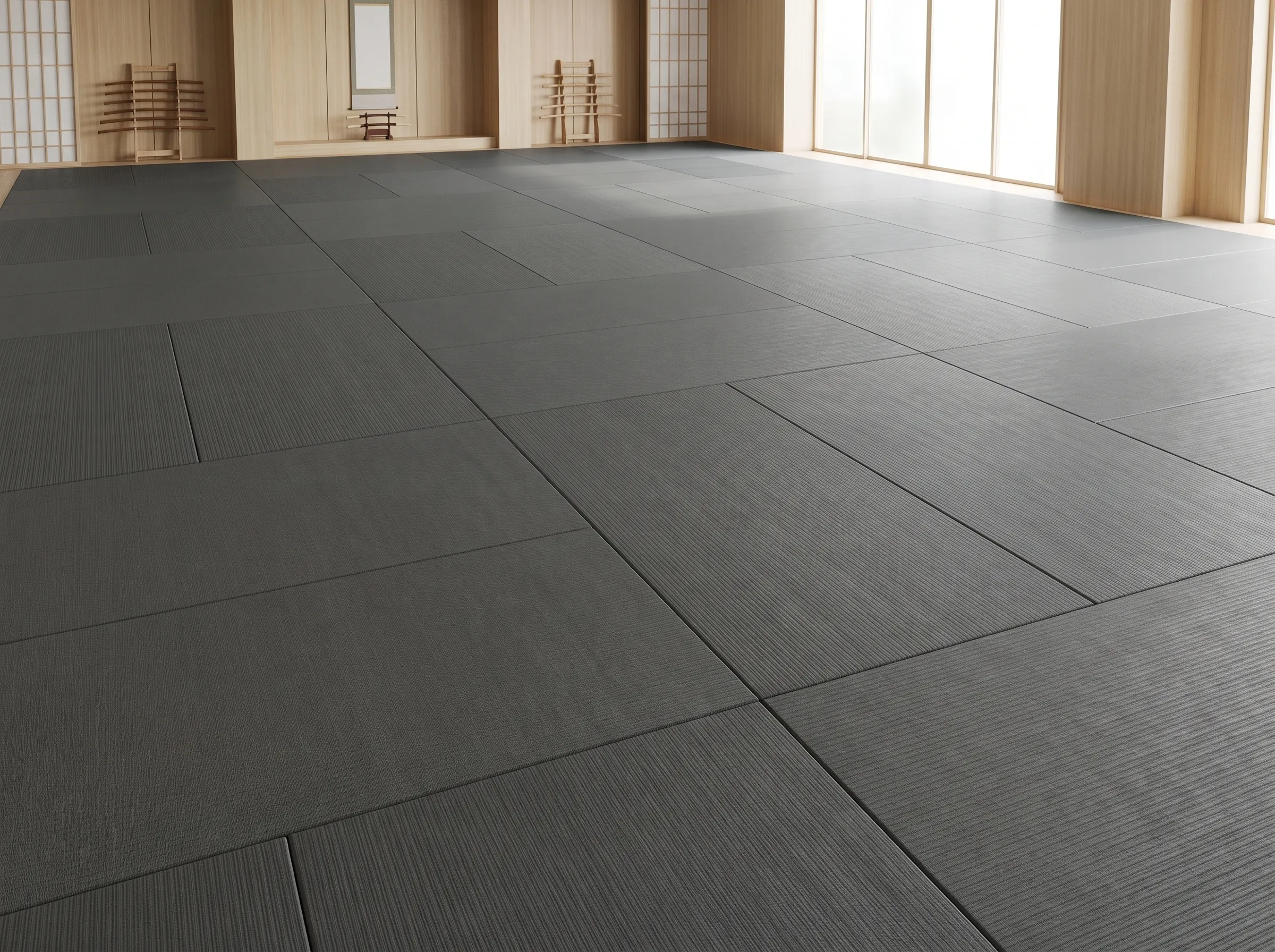
Understand How to assemble the tatami It's essential when creating or renovating the surface of a gym, dojo, or sports center. Proper installation isn't just about aesthetics: it contributes to the stability of the area and the safety of athletes during training, falls, and fights.
A tatami for gym A professional flooring system must be installed taking into account the size of the room, the characteristics of the underlying flooring, and, above all, the discipline practiced. Judo, karate, BJJ, and MMA, in fact, subject the surface to different stresses.
For this reason, assembly must be planned before starting installation. Correctly measuring the space, checking the subfloor, and inspecting the tatami mats will create a uniform surface suitable for sports use. So, let's look at what checks to perform before starting assembly.
Content index
How to assemble a tatami mat: what to check before installation
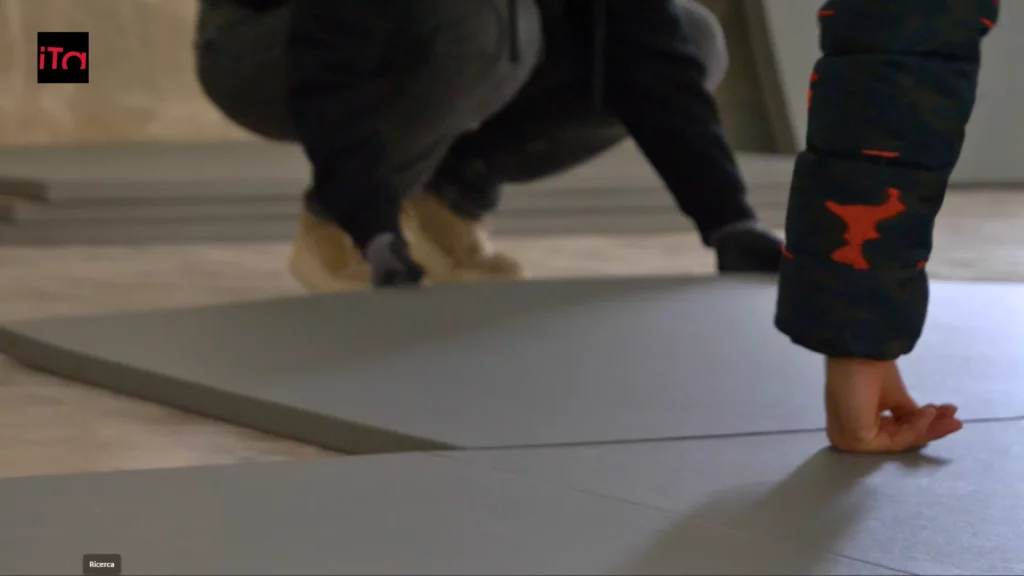
Before laying a tatami floor It's essential to properly prepare the area. Measurement errors or unevenness in the substrate can compromise the alignment of the entire surface.
Measuring the area and designing the tatami floor
The first step is to precisely measure the length and width of the area to be covered, also considering any pillars, niches, doors, recesses, or out-of-square walls.
From these measurements the layout of the tatami for gym, the number of elements needed and their arrangement.
The design must also take into account the discipline practiced. tatami judo, for example, is frequently subjected to falls and projections, while a tatami karate must respond to different movement dynamics.
Check the floor underneath
The installation surface must be:
- flat and stable;
- clean;
- dry;
- free from debris or foreign bodies;
- without obvious irregularities.
Dips and bumps can prevent the tatami from resting evenly and create uneven surfaces in the flooring.
Check the tatami before assembly
Before installation, it is advisable to check each element for dimensions, thickness, coating and general integrity.
If the project includes multiple colors, it is also a good idea to define their arrangement in advance. Martial arts tatami they must be considered as part of a single sports surface: planning the layout before assembly allows you to avoid corrections once the installation is already advanced.
How to correctly lay the tatami in the gym
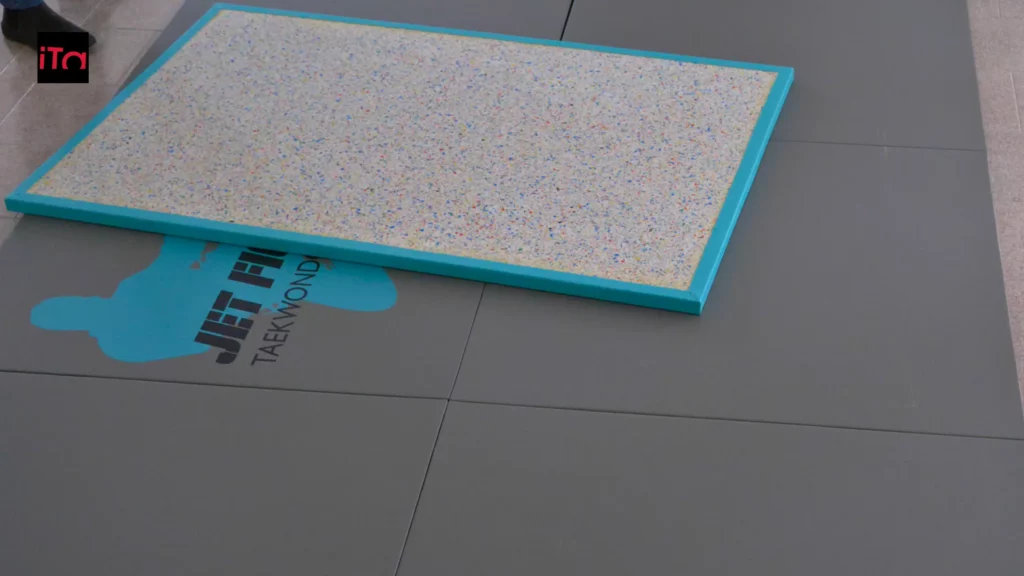
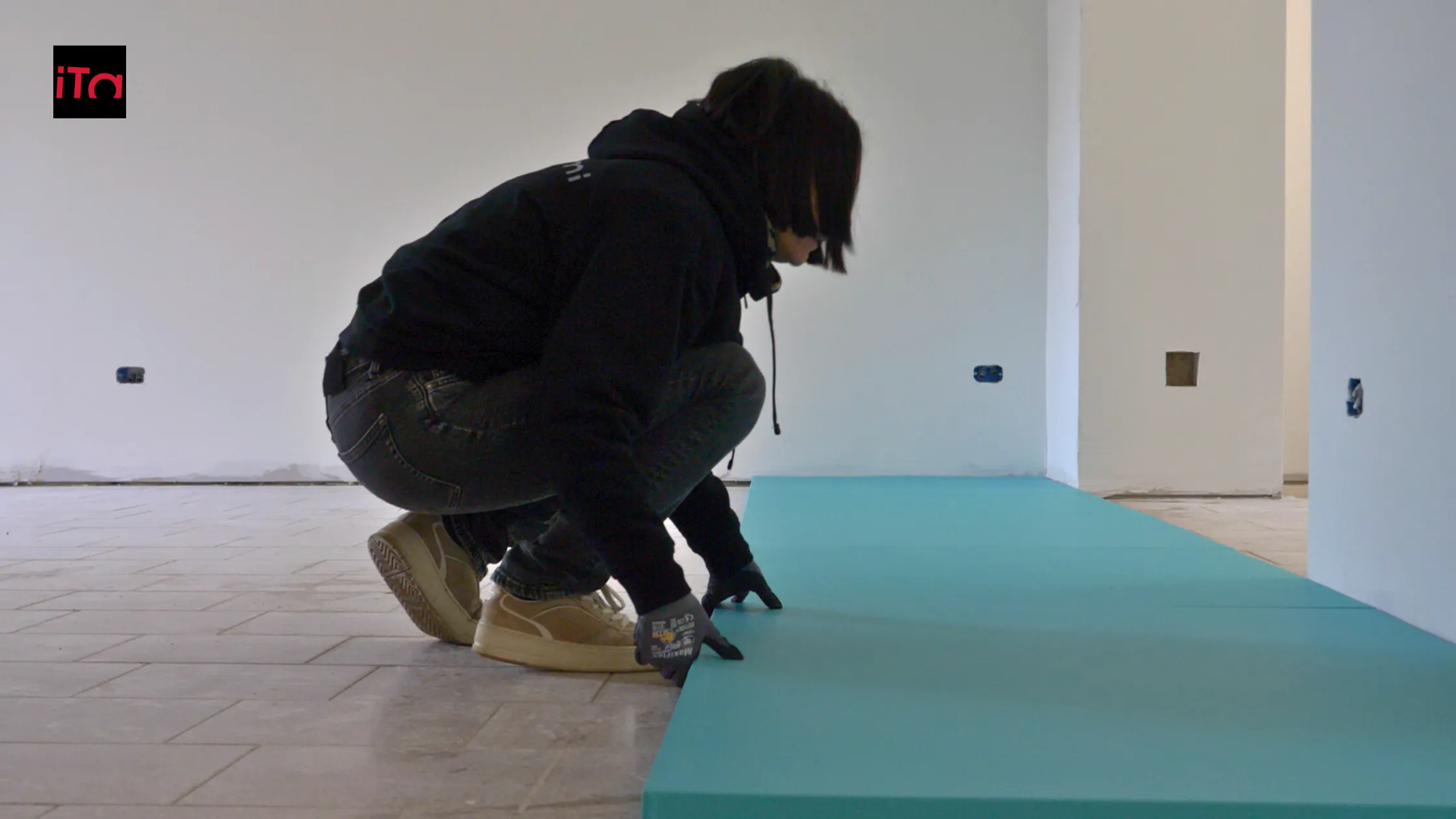
Once the floor has been prepared and the layout defined, you can start laying the Gym tatamiThe goal is to obtain a continuous, smooth, and stable surface, avoiding misalignments that could increase as assembly proceeds.
Define the starting point of the pose
Before placing the first tatami, it's important to identify a reference line consistent with the room's geometry. The starting point should be chosen based on the design, the walls, and the final configuration of the area.
Starting without a precise reference can lead to alignment differences that are difficult to correct in the back rows.
Place the first row of tatami
The first row represents the basis of the whole tatami floorThe modules must be placed precisely next to each other, ensuring that they maintain a uniform line.
During this phase it is useful to check:
- edge alignment;
- correct adhesion to the floor;
- absence of differences in level;
- expected arrangement of colors.
An off-axis first row can progressively compromise the entire surface.
Proceed while maintaining alignment
Assembly must continue progressively, checking each new row before moving on to the next.
The tatami mats must be placed side by side without leaving any obvious gaps between them. The area must act as a single surface, especially when used for activities involving rapid movement, falling, or ground fighting.
Handle edges, walls and irregular points
Walls that are not perfectly straight, pillars and recesses must be considered already in the design phase.
In these cases, it is important to avoid improvised adjustments during installation. A correct perimeter configuration allows for a tatami for gym orderly, continuous and appropriate to the real characteristics of the environment.
How should a martial arts tatami be set up?
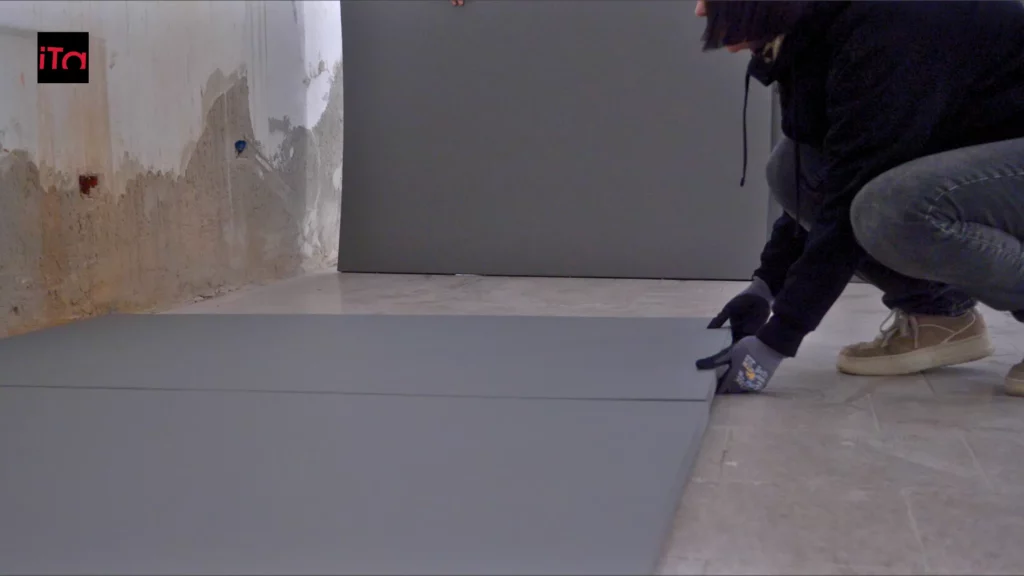
The assembly of a Martial arts tatami It must also be evaluated based on the discipline practiced. Not all activities produce the same stresses and, consequently, the surface must be designed considering movements, falls, projections, and frequency of use.
Assembly of the judo tatami
In judo, throws and falls are a constant part of training. tatami judo It must therefore form a uniform, stable surface suitable for absorbing the impacts generated during practice.
Unevenness, gaps between modules, or surface movement can interfere with technical execution and increase the risk of injury. Therefore, the quality of the tatami and proper design of the area are integral to dojo safety.
Assembly of the karate tatami
Karate is dominated by rapid movements, changes of direction, kicking techniques and explosive movements. tatami karate It must therefore guarantee a continuous and stable surface, on which the athlete can move without encountering irregularities.
The color scheme can also be designed to identify specific training or competition areas.
Tatami for BJJ and MMA: a surface designed as a system
In BJJ and MMA, contact with the floor is frequent and includes ground fighting, takedowns and falls.
For these disciplines it is not enough to evaluate the single mat: the tatami for gym It must be conceived as a complete system, in which material, thickness, absorption capacity, configuration and stability work together.
This is why iTatami develops professional surfaces designed to withstand the real-world stresses of martial arts and combat sports, with particular attention to athlete protection.
Permanent or temporary assembly of the tatami
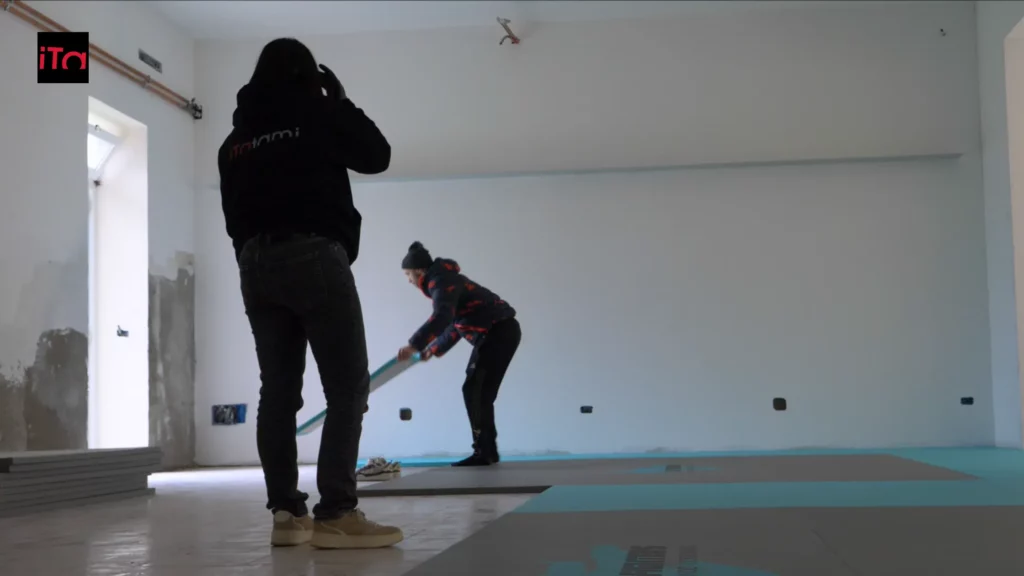
The mounting method also changes based on the use of the space. tatami for gym A permanently installed surface requires a different design than a surface used only for events, temporary courses or competitions.
Tatami for a permanent gym or dojo
In a dojo or martial arts room, the tatami is generally left in place for extended periods. In this case, it's important to design the entire surface based on the size of the room, the discipline practiced, and the intensity of use.
The installation must ensure continuity between the different elements and a stable configuration along the entire perimeter.
In environments used daily, such as gyms, sports clubs, and sports centers, it's also advisable to plan maintenance and replacement procedures for individual modules from the outset, so you can intervene without having to modify the entire surface.
Folding tatami and temporary areas
When the room is used for multiple activities or needs to be reconfigured frequently, it may be necessary to adopt a solution that is easier to install and remove.
A foldable tatami or a professional system designed for temporary areas may be suitable for events, competitions, multipurpose gyms or spaces that cannot be permanently dedicated to a single discipline.
Even in these cases, however, speed of assembly and ease of handling should not replace safety requirements. The surface must remain uniform, stable, and adequate for the stresses generated during sports activities.
Checks to be carried out after assembling the tatami
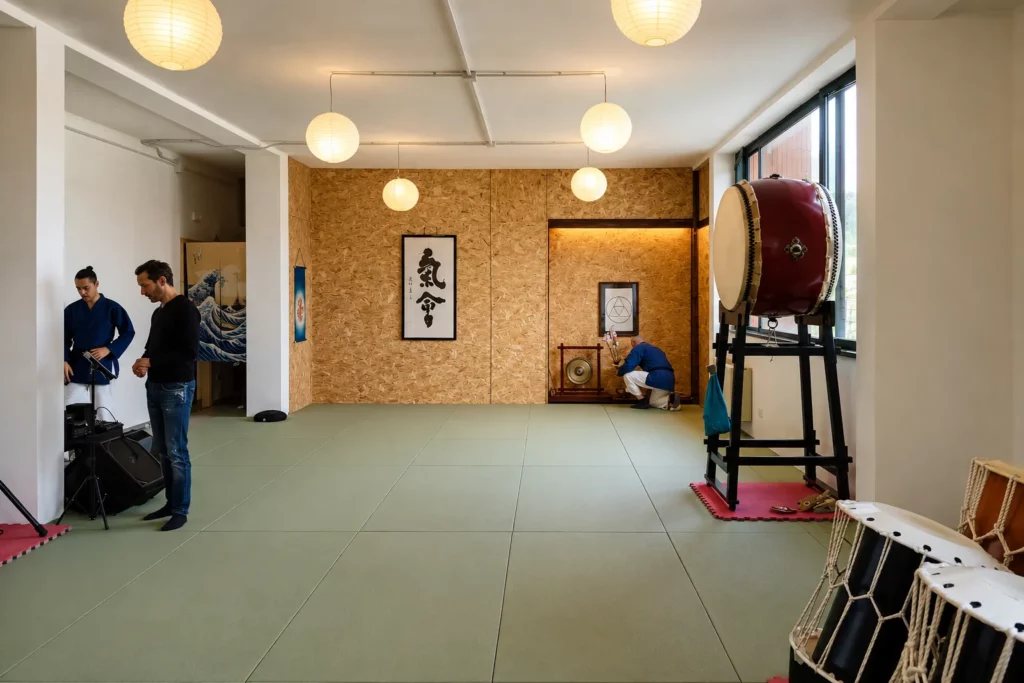
Once the installation is completed, the work cannot be considered finished without checking the entire surface. Before using the tatami floor It is necessary to check that each element is correctly positioned and that the area is uniform.
Check surface alignment and continuity
The first check concerns the alignment of the tatami mats. The edges must be even and there must be no obvious gaps between one piece and another.
It is also important to check that there are no differences in level, elevations or points where one module is higher or lower than the others.
A continuous surface reduces the presence of obstacles during movement, falls and ground combat.
The installation must ensure continuity between the different elements and a stable configuration along the entire perimeter.
In environments used daily, such as gyms, sports clubs, and sports centers, it's also advisable to plan maintenance and replacement procedures for individual modules from the outset, so you can intervene without having to modify the entire surface.
Check the stability of the tatami floor
The second check concerns the behavior of the surface during use.
It is advisable to walk around the entire area, applying pressure to different points and checking that the tatami does not show any abnormal movements or less stable areas.
For disciplines such as judo, BJJ and MMA, this control is particularly important because the surface is repeatedly subjected to throws, takedowns and changes of direction.
Perform periodic checks after installation
The safety of the Martial arts tatami it must also be maintained over time.
It is therefore advisable to schedule periodic checks to verify:
- module alignment;
- coating conditions;
- any movements;
- presence of differences in level;
- status of the most used areas.
Regular maintenance allows you to quickly identify any anomalies and keep the surface suitable for daily training.
Mistakes to avoid when setting up a tatami
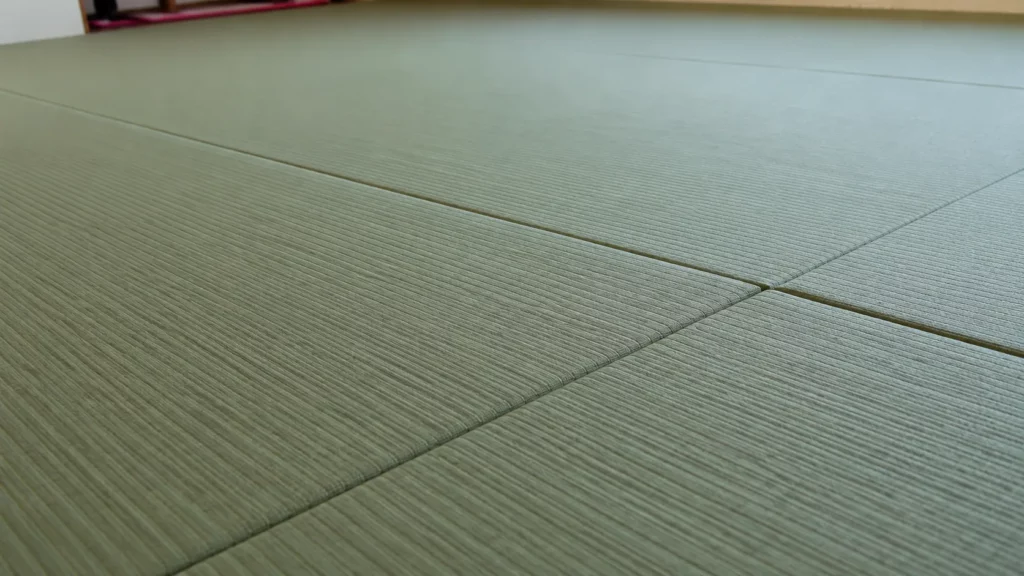
Even a professional surface can lose its effectiveness if installed without proper planning. During assembly of the tatami for gym It is therefore important to avoid some common mistakes.
Installing the tatami on an uneven surface
Hollows, cracks or unevenness in the subfloor can create differences in height between the modules and compromise the continuity of the surface.
Before laying it is therefore necessary to check that the floor is stable and sufficiently even.
Starting without having designed the layout
Proceeding without a defined layout can lead to misalignments, unexpected cuts, or difficulties in managing walls, pillars, and recesses.
The layout must be defined before starting the installation.
Do not check alignment during assembly
A small error in the first few rows can gradually increase. This is why alignment must be checked throughout the installation, not just at the end.
Leave spaces or differences in level between the tatami
The different elements must form a tatami floor uniform. Spaces, elevations, or unstable areas can interfere with the athlete's movements and ground combat phases.
Choose the tatami only based on price
A cheap tatami It shouldn't be evaluated solely based on initial cost. Materials, density, absorbency, durability, and discipline are key factors when choosing a professional surface.
Using used tatami mats without checking their condition
Even a used tatami It must be carefully inspected before installation. Warping, loss of uniformity, damage to the coating, or differences in thickness can compromise the evenness of the area.
The evaluation must therefore always concern the actual conditions of the product and its suitability for the intended sporting use.
Professional tatami assembly: from design to installation
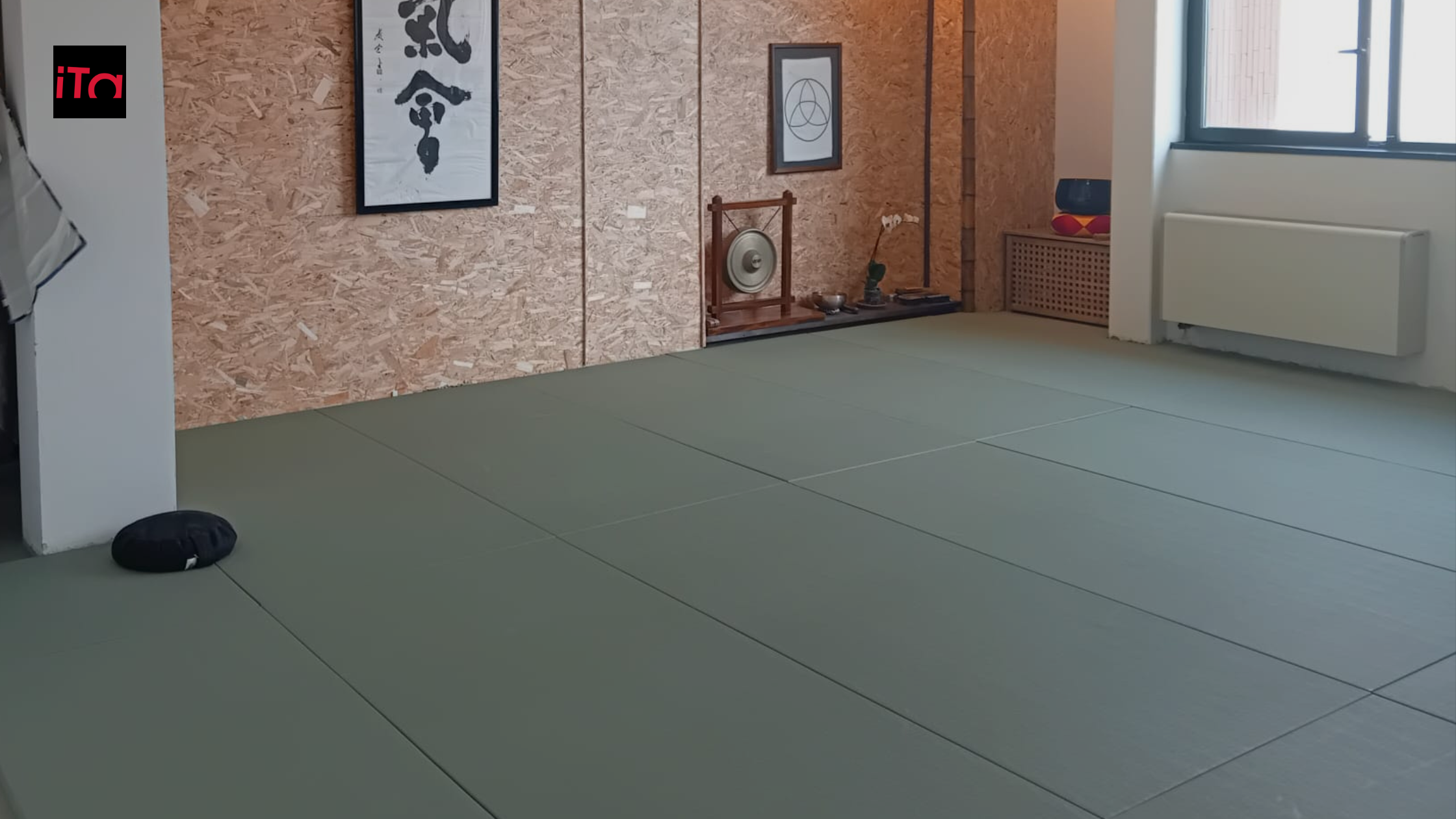
Know How to assemble the tatami This means considering the entire surface as an integral part of the training area. Correct measurements, floor preparation, module layout, alignment, and final checks all contribute to the quality and safety of the installation.
For a gym, a dojo or a sports centre, the choice should therefore not be limited to the simple tatami sale, but starting from the characteristics of the environment and the disciplines practiced.
iTatami supports gyms, ASDs and operators in the sector in the design of tatami for gyms and professional martial arts surfaces, evaluating the size, configuration and technical requirements of the area.
Correct design allows you to create a surface consistent with its intended use and reduces problems related to installation, stability, and maintenance over time.
To create or renovate your tatami area, you can request a technical assessment and a quote for the best solution for your space.
Requests
FAQ - Frequently Asked Questions about tatami mat assembly
We start from area measurement, from the subfloor check and from the definition of the layout. Subsequently we proceed with the progressive pose of the modules, continuously checking alignment, continuity And stability.
The starting point depends on the geometry of the room and the planned layout. It's important to identify a reference line before starting.
Yes, when the substrate is compatible with the chosen system and has adequate conditions of flatness, cleanliness, stability and drying.
Stability depends on the correct design of the surface, the containment system and the characteristics of the tatami used.
It depends on the size of the surface, the geometry of the environment and the complexity of the layout.
886

 English (UK)
  Italiano
  Français