




March 24, 2026
0 Comments

Written by
Team iTatami
Aikido tatami measurements: how to design a safe and functional dojo
When talking about Aikido tatami measurements, you can't simply think in terms of standard dimensions. Unlike many other martial arts, aikido doesn't have a set competition area: the practice surface must be designed based on the number of practitioners, the available space, and above all, safety in the event of a fall.
In the aikido dojo, practitioners often work in pairs, performing throws and techniques that involve large movements, rotations, and repeated falls. For this reason, the design of the surface area does not only concern the total square footage, but also the continuity of the tatami, the uniformity of the surface and the most suitable thickness to absorb impacts.
Understanding how to correctly define the Aikido tatami measurements It therefore means designing a safe training environment, with fluid movements and suitable for daily practice.
🎯 Find out more about our Tatamis with our Catalogue
iTatami Tatmi are designed down to the smallest detail to ensure safety for athletes in every martial arts discipline.
Find out more →
iTatami Tatmi are designed down to the smallest detail to ensure safety for athletes in every martial arts discipline.
Find out more →
Content index
Why Aikido tatami measurements do not follow a single competition standard
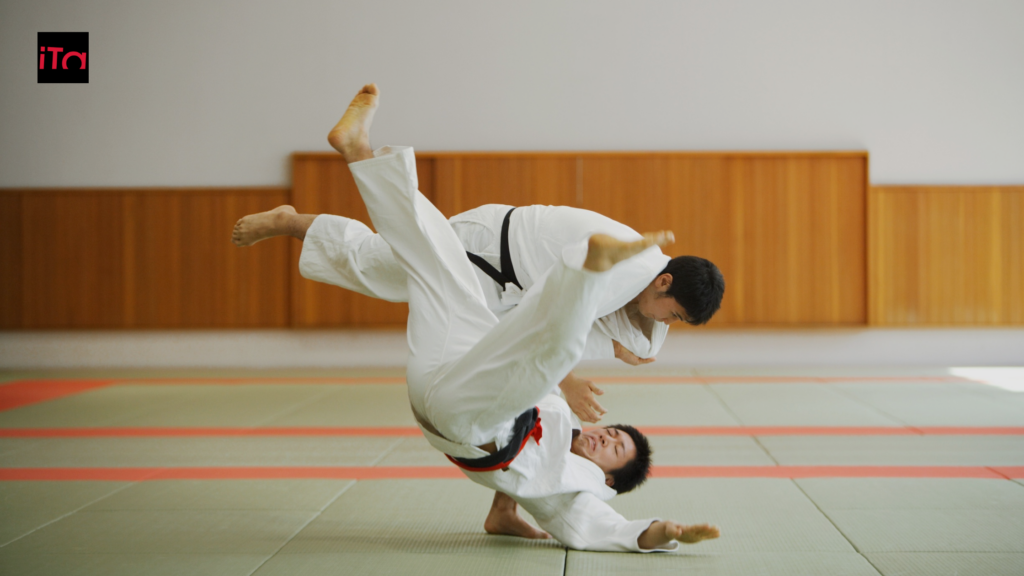
Aikido does not have a standard competition area like other disciplines.
In disciplines such as judo or taekwondo There are competition surfaces codified with precise dimensions. In aikido, however, the practice develops mainly in the context of dojo, where training is continuous and collaborative.
This means that the Aikido tatami measurements They are not determined by any sporting regulation, but must be defined based on the configuration of the space and the number of practitioners present on the tatami during the lesson.
The goal is not to delimit a competition field, but to create a continuous and safe surface where multiple couples can work simultaneously.
Understanding this structure is essential not only for organizing competitions, but also for designing a dojo that reflects official standards.
Difference between permanent dojo and multipurpose hall
The design changes a lot depending on the type of space:
Permanent Dojo
area dedicated exclusively to martial arts
tatami installed in a stable way
total continuity of the surface
Multipurpose room
space shared with other sports activities
modular or removable tatami
variable configuration
In the first case, it's possible to design a larger, more uniform surface; in the second, it's important to find a compromise between modularity and safety.
What changes in design between amateur and intensive use
A dojo with a few occasional practitioners can function with smaller surfaces.
On the contrary, a gym with frequent courses or intensive training courses must provide more operating space and a higher quality tatami, capable of absorbing repeated falls without losing stability.
Aikido tatami measurements and recommended space for each practice pair
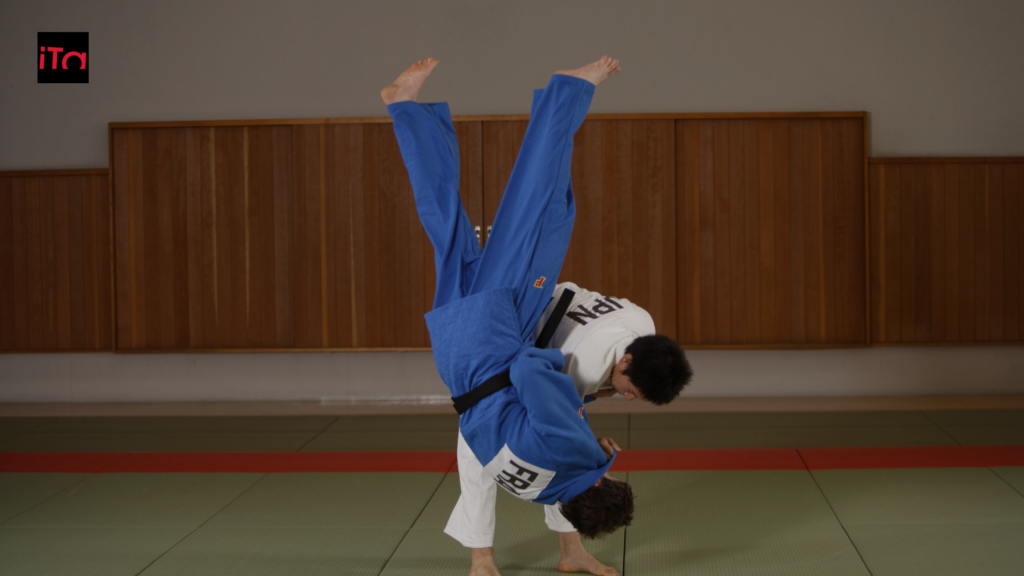
One of the most useful criteria for defining the total surface area is to think in terms of space for a couple of practitioners.
During aikido training, two practitioners work together performing throwing and joint control techniques. These techniques require circular movements and large displacements, so the space must be sufficient to avoid interference with other couples.
According to the standards of the World Karate Federation, the official configuration of the tatami area is as follows:
How much space should you allow for safe working?
On average, a couple should have available approximately 12/16 m² of surface area to practice safely.
This space allows you to:
- perform techniques with large movements
- perform falls without risk of collisions
- maintain a safe distance between couples
How to calculate the total surface area of the dojo
A simple estimate can be made by multiplying the space per pair by the number of pairs present during the lesson.
Practical example:
6 pairs → approximately 70/90 m² of tatami
8 pairs → approximately 100/120 m²
10 couples → over 140 m²
Of course, the design must also take into account the perimeter safety zones, which allow you to avoid falls too close to walls or obstacles.
Lateral distances and buffer zones
It is good practice to foresee at least 1/2 meter margin between the edge of the tatami and the walls of the room.
This area can also be used for:
instructors' passages
observation area
installation of wall protections
Continuity and uniformity of the surface: the true technical criterion in the aikido dojo
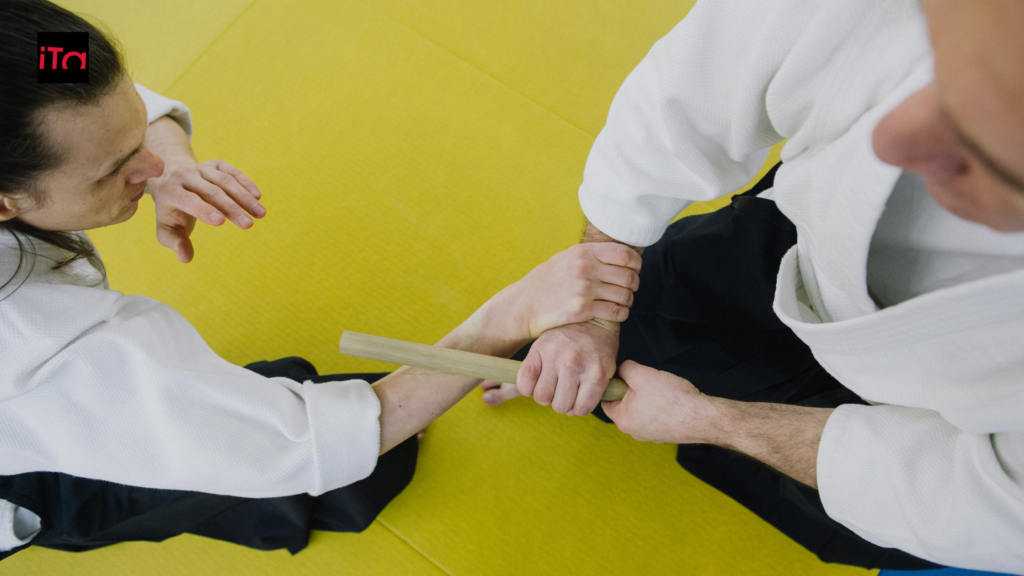
When designing the Aikido tatami measurements, a common mistake is to focus only on the total square footage. In reality, one of the most important aspects is the continuity of the practice surface.
Why avoid unevenness and irregular joints
In the aikido dojo, practitioners perform rolls and falls in all directions. A surface with unevenness, irregular joints, or unstable shapes can:
compromise the fluidity of movements
increase the risk of injury
create points of instability during falls
For this reason the tatami must be perfectly uniform and stable.
Continuous surface and fluidity of movements
A continuous surface allows practitioners to move freely without perceiving interruptions between modules.
This is especially important in aikido, where many techniques involve circular movements and rotations that run through the entire training area.
Tatami stability and fixing
In permanent dojos, it is often recommended to use systems that guarantee greater surface stability, for example through installation configurations designed to avoid movement of the modules.
When the tatami is installed stably, the entire surface behaves like a single continuous plane, improving both safety and quality of practice.
Recommended Aikido Mat Thickness: Why 4cm Is the Best Choice
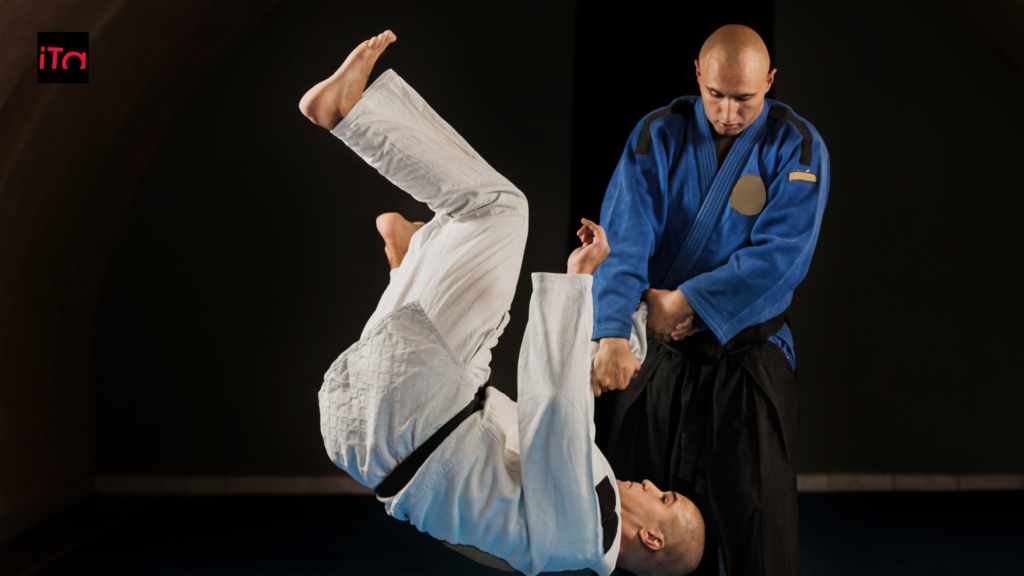
Another fundamental element in the design concerns the thickness of the tatami.
Impact absorption in falls
During aikido training, taking falls (ukemi) is a central part of the practice.
The tatami must therefore offer good impact absorption capacity, without being excessively soft.
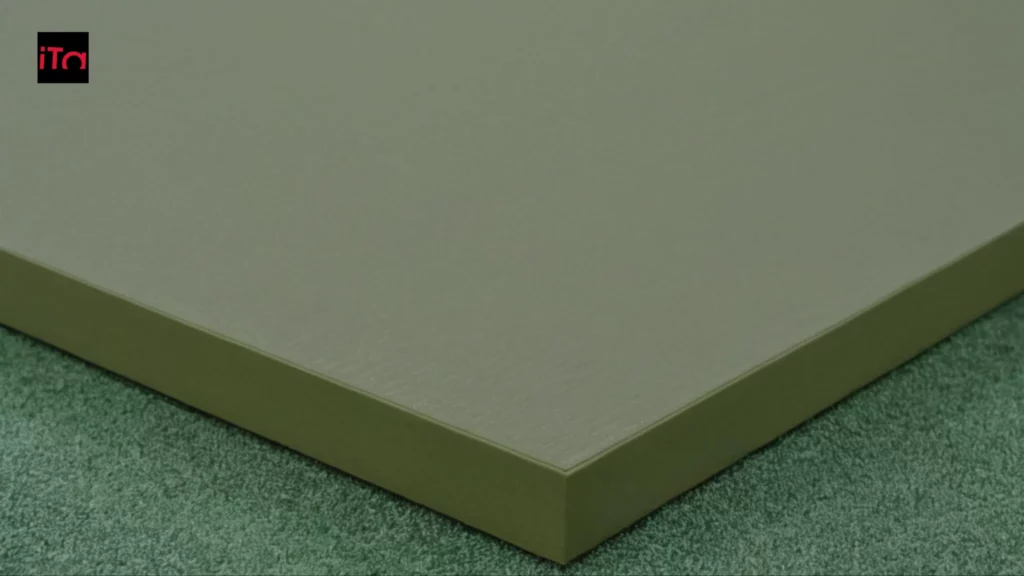
For this reason it Recommended thickness is generally around 4 cm, a solution that guarantees:
adequate shock absorption
stability during movement
balance between comfort and control
Difference between too hard and too soft tatami
A tatami that is too thin or rigid can increase the perception of impact during falls.
Conversely, an excessively soft surface can make movements unstable and compromise the precision of techniques.
The thickness of 4 cm therefore represents the most commonly used compromise in aikido dojos, especially in areas dedicated to daily practice.
When to evaluate customized solutions
In some cases it may be useful to design the surface specifically, for example when:
the dojo hosts many beginner practitioners
the space is also used for other disciplines
the structure requires specific technical solutions
In these situations it is important to evaluate customized tatami configurations.
Mistakes to avoid when choosing aikido tatami mat sizes
When designing a dojo, some recurring errors are often encountered.
Rely only on available square footage
One of the most common mistakes is to design the surface exclusively based on the space of the room.
Instead, planning should start from:
average number of practitioners
training mode
intensity of lessons
Underestimating the real number of couples
Many dojos design their space only for current classes, without considering the future growth of the gym.
A slightly larger surface area allows for greater flexibility for:
internship
seminars
lessons with multiple participants
Neglecting system stability and continuity
A technically correct surface must guarantee:
continuity of the plan
stability of the modules
surface uniformity
These are aspects that directly impact on the safety in falls.
Custom Aikido tatami design
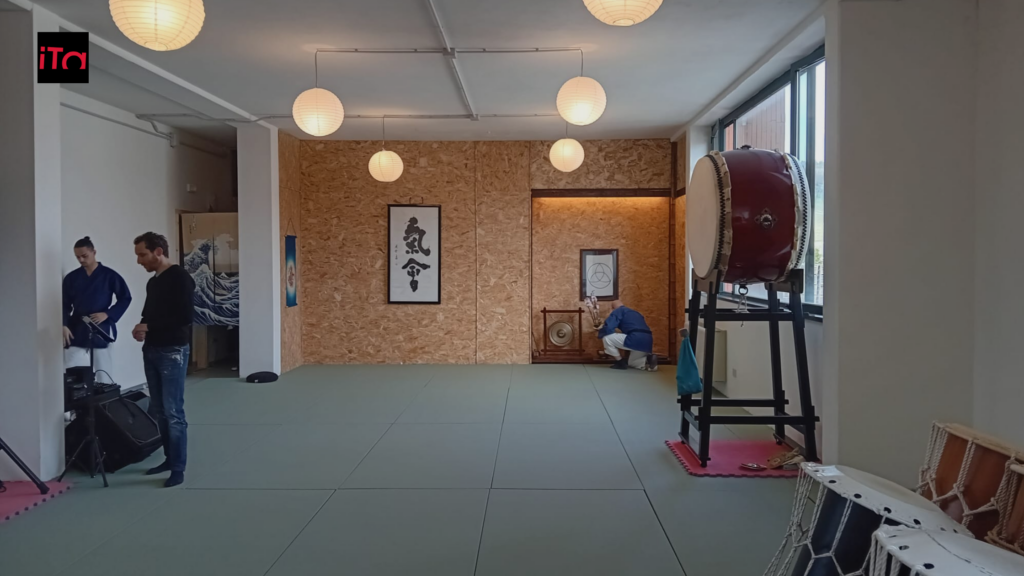
When designing a dojo, the Aikido tatami measurements they cannot be defined with a standard solution valid for all spaces.
Each facility has different characteristics: room size, number of participants, presence of pillars, use of the gym, and frequency of training. For this reason, the most effective choice is often to develop a custom tatami design, which allows you to optimize space and guarantee a continuous, stable and safe surface.
Are you designing a dojo or renovating your training surface?
We can help you define:
ideal surface dimensions
module configuration
most suitable thickness for aikido practice
solutions to ensure continuity and safety of the tatami
Request a consultation for the design of a custom Aikido tatami.
Requests
FAQ - Frequently Asked Questions about Aikido Mat Sizes
There is no standard competition size in aikido. The surface is generally designed based on the number of practitioners. On average, 12–16 m² per training couple, ensuring sufficient space for safe projections and falls.
The most used thickness in dojo is about 4 cm, because it allows you to effectively absorb the impact of falls while maintaining stability during movement.
The size of the dojo depends on the number of practitioners. For example:
6 pairs → approximately 70/90 m²
8 pairs → approximately 100/120 m²
10 couples → over 140 m²
It is also recommended to plan 1/2 meter of perimeter margin between the tatami and the walls.
Yes, surface continuity is essential. A smooth and stable tatami reduces the risk of injury and allows for fluid movements during throws, rotations, and falls.
964

 English (UK)
  Italiano
  Français